Knife sets are a scam. Not because knives don't matter — they do, enormously — but because a block of eight knives is seven more knives than most people need. The question isn't "what's the best knife set?" It's "what's the best 8-inch chef's knife?" Because if you answer that question and buy one good one, you're done. That knife handles 90% of everything you'll ever cut.
- Top pickVictorinox Fibrox Pro 8" Chef's Knife~$45
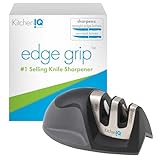
- Best budgetKitchenIQ Edge Grip 2-Stage Knife Sharpener~$8
- Worth the splurgeMac Professional 8" Chef's Knife with Dimples~$150
The one to buy: Victorinox Fibrox 8" Chef's Knife
This is the knife that gets recommended by culinary schools, food editors, and professional cooks who don't have a sponsor check attached to the recommendation. It's Swiss-made, incredibly sharp out of the box, lightweight, and costs $45. You will cut better with this knife than with a $300 German blade you're afraid to sharpen. The handle is slightly ugly. The edge is not.
Serious cooks own this knife because it performs, not because it impresses guests. Once you've used a properly sharp 8" chef's knife for a month, you'll wonder why anyone needs anything else.
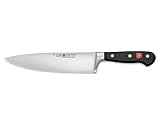
If you want to spend more: Mac Professional 8"
If you cook daily, love the process, and want a knife that feels like a precision instrument, the Mac MTH-80 is the upgrade. It's a Japanese-style blade — thinner, harder steel, holds an edge longer, requires more care (don't put it in the dishwasher, don't let it sit wet). Cooking professionals who buy their own knives often land here. It costs $150 and earns every dollar.

The two other knives worth owning
Once you have your chef's knife, the only two additions that matter:
- Paring knife ($15–25) — for small, precise work: peeling, trimming, cutting small fruit. The Victorinox 3.25" paring knife is the obvious choice. ~$9 on Amazon →
- Serrated bread knife ($30–50) — for bread, tomatoes, anything with a hard exterior and soft interior. The Victorinox 10.25" serrated knife has never needed sharpening in 10 years. ~$35 on Amazon →
That's three knives total. You do not need eight.
The thing nobody tells you: sharpness matters more than brand
A $15 knife that's sharp will outperform a $300 knife that's dull. The single best investment alongside any knife purchase is a honing steel ($15–30) and a basic whetstone ($20–40). Hone before every use, sharpen a few times a year. Your knives will last decades and stay terrifying sharp.
Frequently asked questions
Do I really only need one knife?
For 90% of home cooking, yes. An 8-inch chef's knife handles vegetables, meat, herbs, and most other tasks. Add a paring knife for small work and a serrated knife for bread, and you have everything you need.
What's the difference between German and Japanese knives?
German knives (Wüsthof, Henckels) are thicker, heavier, more durable, and more forgiving — better for rough work and beginners. Japanese knives (Mac, Global, Shun) are thinner, harder, hold a sharper edge longer, but require more careful maintenance. Both are excellent.
How often should I sharpen my knives?
Hone (realign the edge) before each use with a honing steel. Sharpen (remove metal to create a new edge) 2–4 times per year depending on use. A sharp knife is also a safer knife — it requires less force and is less likely to slip.