Somewhere around book four of a series you didn't love but also didn't hate, you've probably asked yourself the question that actually matters: is this still worth my time? Not "is this book bad" — plenty of mediocre books get finished without complaint. The real question is whether the story is still earning the hours you're about to hand it, on top of the hours you already spent. That's a different calculation, and most readers never run it on purpose. They just keep going because they started.
- Top pickThe Hard Thing About Hard Things by Ben Horowitz~$15
- Best budgetAtomic Habits by James Clear~$13
- Worth the splurgeFull Focus Planner by Michael Hyatt~$45
This isn't really an article about which fantasy series sticks the landing or which mystery franchise ran out of ideas around book nine. It's about the commitment question itself — the one that applies just as much to a dense 500-page business book, a director's entire filmography, or a fifteen-book series you picked up because everyone online swears the payoff is worth it. Below: the honest signs a long commitment is paying off, the red flags that say it's time to walk away guilt-free, and — since we're a shop that stocks a small, curated set of standalone reads rather than sprawling series inventory — eight books that give you the whole story in one sitting, no sequel required.
The real cost of "just one more book"
Here's the math nobody does before picking up book one: the average novel runs 6-9 hours to read at a normal pace. A seven-book series is easily 50-60 hours — more if the later installments bloat, which they almost always do. That's more time than most people spend on an entire semester-long class. You wouldn't enroll in a class for a subject you were lukewarm on in week one and just hope it gets better by week twelve, but that's exactly what continuing a so-so series asks you to do.
None of this means long series are a trap. Some of the best storytelling experiences you'll ever have require exactly this kind of investment — a world that needs six books to breathe, character arcs that only land because you watched them build slowly. The problem isn't length. The problem is committing to length on autopilot, without ever checking whether the specific series you're in is one of the ones where the investment compounds, or one of the ones where you're just paying interest on a decision you made three books ago.
Signs a series is actually worth the commitment
The series worth finishing tend to share a few traits, and you can usually spot them by book two or three — you don't need to wait until the end to know.
The pacing holds, or gets tighter. Good series don't just add more plot with each installment — they get more efficient at delivering what made you love book one. If book three feels leaner and more purposeful than book one, that's the author (or the writers' room, if we're talking TV) finding their rhythm. That's a great sign.
Character growth feels earned, not repeated. The protagonist should not be re-learning the same lesson in book five that they already learned in book two. If they are, the series is treading water and calling it depth.
The world rewards the time you've put in. Callbacks land differently once you have history with a place or a cast. If book four makes book one retroactively better — a detail that seemed throwaway turns out to matter — that's the payoff long-form storytelling is supposed to deliver, and it's the single best argument for staying in.
You're excited, not obligated. This one is simple and people ignore it constantly: if you're reaching for the next book because you want to know what happens, keep going. If you're reaching for it because you already own it and it feels wasteful not to, that's not excitement. That's inertia wearing excitement's coat.
Red flags it's time to bail — no guilt required
Just as there's a pattern to series worth finishing, there's a pattern to the ones you should feel completely fine abandoning at book three, or book one.
- Diminishing returns on the plot. Each new book raises the stakes numerically (bigger battle, bigger conspiracy, bigger cast) without raising them emotionally. That's a sign the story has run out of ideas and is compensating with scale.
- Filler you can feel. If you could summarize an entire book in two sentences without losing anything essential to the overall arc, that book didn't need to exist. It existed because the series was profitable and publishers wanted another installment.
- You've started skimming. This is the tell readers ignore the longest. The moment you're skimming dialogue to get to "the good parts," you've already made the decision — you're just not admitting it yet.
- The thing you loved about book one is gone. Tone shifts happen. Sometimes they're intentional and interesting. More often, a series that started sharp and specific drifts into generic because it's chasing a wider audience than the one that made it good in the first place.
- You're finishing out of sunk cost, not curiosity. If your honest answer to "why am I still reading this" is some version of "I've already come this far," that's not a reason to continue. That's the exact bias behavioral economists warn you about, just applied to a bookshelf instead of a bad investment.
None of these red flags mean the series is objectively bad, or that people who love all nine books are wrong to love them. They mean it's no longer worth your specific hours, which is the only metric that actually matters when you're the one holding the book.
The sunk cost trap, and how to actually get out of it
The single biggest reason people finish series they've stopped enjoying is that quitting feels like admitting the hours already spent were wasted. They weren't — the enjoyment you got out of the books you liked already happened and belongs to you regardless of what you do next. Nothing about disliking book five retroactively cancels out how much you loved book two. Once you separate "hours already spent" (gone either way) from "hours about to be spent" (the only thing actually in your control), the decision gets a lot easier. The question is never "was this worth it so far." It's "is book six worth the next eight hours, starting from right now, knowing nothing about it changes what already happened." Ask that version of the question and the answer is usually obvious.
The same logic applies outside of fiction, which is worth naming directly: a 300-page business book that's said everything it needs to say by chapter six doesn't get better if you push through to chapter fourteen out of obligation. A show, a podcast catalog, a self-help author's ten-book backlist — the commitment math is identical. The sunk cost doesn't care what genre it's dressed in.
Where standalones quietly win
All of which is the honest case for keeping a few complete-in-one-book reads in rotation — not as a consolation prize for series fatigue, but as a genuinely smart hedge. A standalone can't disappoint you in book four because there is no book four. You get the whole argument, the whole story, the whole payoff, in a single sitting or two, and then you're free to decide what's next with a completely clean slate. That's not a lesser reading experience. For a lot of readers, especially anyone currently mid-series-fatigue or staring down a to-be-read pile that feels more like a to-do list, it's the better one.
To be upfront about it: what follows isn't a "series," and we're not pretending it is. These are eight standalone books we actually stock and can vouch for — mostly sharp nonfiction and a couple of genuinely great one-and-done reads — picked specifically because none of them ask you for a sequel. If the commitment math above has you side-eyeing your current series, these are a good place to redirect that energy.
Eight books that give you the whole thing in one shot
Start with the business and career reads, since "dense nonfiction that pays off in a single read" is its own version of the commitment question — you want the payoff without a six-volume slog.
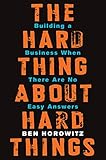
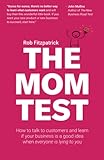
Then there's the habit-and-mindset shelf, which is exactly the kind of category prone to bloated series (there's always a "part two" for this stuff). These two don't need one.

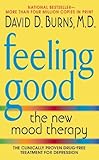
For a different kind of standalone payoff — story and craft over instruction — there's exactly one novel in this lineup, and it earns its spot precisely because it doesn't try to be more than one book.
Rounding out the shelf: two reads that reward a single close pass rather than a series-style return trip, plus one tool that isn't a book at all but solves the same "finish what I start" problem in a different format.
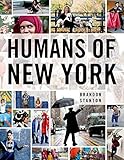
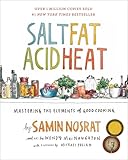
None of these are trying to be a franchise. That's the point. Each one delivers a full, satisfying experience without asking you to bank on a sequel sticking the landing — which, after everything above about diminishing returns and sunk cost, might be exactly the kind of read you're actually in the mood for right now.
Frequently asked questions
How do I know if I should DNF (did not finish) a series I'm several books into?
Check whether you're reaching for the next book out of genuine curiosity or out of obligation to the hours you've already spent. If it's the latter, and you've noticed yourself skimming or the stakes rising without the emotion rising alongside them, that's your answer. The hours you enjoyed already happened — quitting now doesn't erase them.
Is it ever worth finishing a series just to see how it ends?
Sometimes, if the ending genuinely matters to you and you can get a reliable summary of what you'd miss. But be honest about the difference between "I need closure" and "I feel guilty stopping." Only one of those is a good reason to spend another eight hours on something you've stopped enjoying.
What's the biggest red flag that a series has run out of ideas?
Escalating stakes without escalating emotional weight — bigger battles and bigger conspiracies that don't actually mean more to the characters or the reader than the smaller ones did in book one. That's a series substituting scale for substance.
Are standalone books really a "smarter" choice than series?
Not universally — a great series can outdeliver ten standalones. But a standalone removes the risk of a weak sequel undoing a strong start, and it gives you a complete experience with zero ongoing commitment. For anyone dealing with series fatigue or a backlog that feels obligatory, that's a real advantage, not a consolation prize.
Do any of the books recommended in this article belong to a series?
No. All eight picks here — including Atomic Habits, The Midnight Library, and The Hard Thing About Hard Things — are complete, standalone reads. We picked them specifically because none of them require a follow-up purchase to feel finished.
How much time should I budget before deciding whether a series is worth continuing?
Two books is usually enough to judge pacing and whether the world is rewarding your attention. If book two feels like a repeat of book one's problems rather than a build on its strengths, that's a reliable early signal — you don't need to wait until book five to trust it.