I have texted "something came up" to a group chat while lying on my couch, fully clothed, one sock on, because I could not put a book down. I have let dinner reservations expire. I skipped a friend's birthday drinks for a business memoir, which is a genuinely embarrassing sentence to type, and I would do it again. This list is not "books I think are objectively great." It's narrower and more useful than that: books that were so absorbing I made a bad, real-life decision to keep reading instead. Some are novels. Most, honestly, are not — because the thing that makes a book impossible to put down isn't genre, it's momentum, and a handful of narrative nonfiction and even a couple of business books have more forward pull than most thrillers I've started and abandoned. I'm not going to pretend a self-help book is a page-turner in the way a crime novel is. I'm going to tell you exactly why each one kept me up, and let you decide if that's the kind of absorbing you're after tonight.
- Top pickThe Hard Thing About Hard Things~$15
- Best budgetThe Midnight Library~$13
- Worth the splurgeFull Focus Planner~$45
The business book that reads like a war story
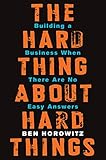
I picked up The Hard Thing About Hard Things expecting a management manual and instead got something closer to a memoir written by someone who'd survived a series of near-death experiences and wanted to tell you about it before he forgot the details. Ben Horowitz doesn't write in the detached, case-study voice most business books use. He writes about laying off a third of his company, about a product that almost killed the business, about the specific 3 a.m. moment he almost quit — and he writes it with the pacing of someone who knows exactly when to end a chapter on a cliffhanger. I sat down to read the introduction on a Tuesday night and looked up two hours later having missed a phone call I'd promised to make. It's not fiction. It's just written like someone who understands that "and then things got worse" is the most effective sentence in the English language.
The one actual novel on this list, and it earns its spot
I want to be straight with you: this site's inventory is heavy on nonfiction, and I'm not going to pretend a productivity book is a thriller to pad out a list. But The Midnight Library is a genuine, unambiguous page-turner, and it's the book that made me cancel an actual dinner plan — not push it back, cancel it, with the friend audibly annoyed on the phone. Matt Haig's premise is simple enough to describe in one sentence (a woman between life and death gets to try out the lives she didn't live) and then he does something harder than a clever premise: he makes you need to know how it resolves. Every chapter ends on a small hook — a new life, a new almost-regret — and the structure is basically engineered for "just one more chapter" to happen four times in a row. If you only read one book off this list for the classic can't-put-it-down feeling, this is the one.
True stories that read faster than fiction
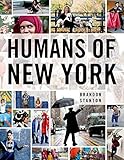
The two books that surprised me most for sheer readability weren't novels at all — they were narrative nonfiction built on real people's stories, and something about knowing it's all true gave it a pull fiction sometimes can't match. Humans of New York: Stories is technically a photo book, which sounds like the opposite of a page-turner, but Brandon Stanton pairs each portrait with a few paragraphs of someone's actual, unfiltered life story, and the format is brutally effective — you tell yourself you'll read three, and ninety minutes later you're on the sixty-somethingth stranger's worst year, unable to stop because you genuinely don't know what the next page holds. It's the audiobook-app equivalent of doomscrolling, except every scroll leaves you slightly more human than before.
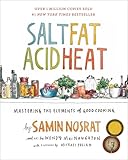
The other is Samin Nosrat's Salt, Fat, Acid, Heat, which I did not expect to read cover to cover, because it's shelved as a cookbook and I assumed I'd flip to recipes. Instead the first hundred-plus pages are essentially a memoir of how she learned to cook, told in her specific, funny, slightly bossy voice, and I read the whole narrative section in one sitting on a night I was supposed to be meal-prepping for the week. The recipes were still there when I finally got to them. I just hadn't planned on the book part being the part that hooked me.
Self-help that hooks you like a story, not a syllabus
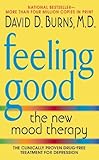
Most self-help books are reference material — you read the chapter that applies to your problem and shelve the rest. A few are written with enough narrative pull that you read them the way you'd read a novel, and those are the ones that end up on this list. Feeling Good by David Burns is the surprise entry: it's a clinical cognitive behavioral therapy book from a practicing psychiatrist, and it should read like a textbook. Instead Burns builds each chapter around real patient case studies — actual people, actual spirals of thought, actual breakthroughs — and I found myself reading "just one more case" the same way I'd read one more chapter of a thriller, because I wanted to know how that person's specific pattern got untangled.
Atomic Habits earns its spot for a different reason: James Clear opens almost every chapter with a short, vivid story — a British cycling team, a hotel fire, a Cincinnati burglar-turned-writer — before he ever gets to the framework. Those story-first openings are what pull you through a book that's otherwise structured like a manual, and they're the reason I finished it in two sittings instead of the slow, dip-in-and-out read most habit books get.
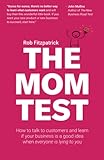
And then there's The Mom Test, which I did not expect to include on a "canceled plans" list, but Rob Fitzpatrick writes about customer interviews with such blunt, funny, no-nonsense energy — and keeps every chapter so short — that it has an almost thriller-like propulsion for anyone who's ever run a startup meeting that went sideways. I read the whole thing on a red-eye I'd planned to sleep through.

What to skip if you only have one night
Not every good book is a good cancel-plans book, and it's worth being honest about the difference. A Full Focus Planner is genuinely useful — it's the tool I actually use to plan my weeks — but it is, by design, the opposite of absorbing. You don't sit down and read a planner cover to cover in one sitting; you fill it in over months, a little at a time, and that's exactly what it's for. If you've got one free evening and you're choosing between a planner and literally anything else on this list, skip the planner tonight and start it tomorrow when you actually need to plan your week. Save it for a Sunday, not a night you're hoping to lose yourself in something.
The same logic applies more broadly: if you're choosing a book specifically to cancel plans over, go for narrative first. The Midnight Library and Humans of New York have the most built-in forward pull of everything here, because they're structured in small, hooky units — chapters or portraits — that make "one more" an easy decision at 11 p.m. The self-help titles reward you just as much, but they ask a little more patience up front before the pull kicks in.
How I actually pick a cancel-plans book
After enough nights of guiltily rescheduling things, I've noticed a pattern in what actually gets me: short chapters, a strong narrative voice, and stakes I can feel even when the book is technically nonfiction. A 400-page novel with slow, literary pacing has never made me cancel anything — but a business memoir with a cliffhanger every ten pages has. If you're shopping for someone else's cancel-plans book, don't just ask what genre they like. Ask whether they want plot-driven momentum (grab The Midnight Library) or true stories that hit harder because they're real (grab Humans of New York or Salt, Fat, Acid, Heat). Either way, warn them in advance. They're going to owe someone an apology text.
Frequently asked questions
Is The Midnight Library actually a fast read, or just a good one?
Both — it's around 300 pages and structured in short, chapter-length "life" segments that each end on a small hook, so it reads faster than its page count suggests. Most people who finish it describe reading it in one or two long sittings rather than the usual bedtime-chapter pace.
Why would a business book like The Hard Thing About Hard Things be a page-turner?
Because it's structured like a survival story, not a management guide. Ben Horowitz writes about specific near-collapse moments with real stakes and cliffhanger chapter endings, which gives it the same forward pull as a memoir even though the subject matter is running a startup.
Is Salt, Fat, Acid, Heat worth reading if I don't cook much?
Yes, for the first section at least. The opening chapters are a personal narrative about how Samin Nosrat learned to cook, written in a strong, funny voice, and that part reads like a memoir independent of whether you ever open it again for a recipe.
Is Feeling Good actually readable, or is it dense clinical material?
It's more readable than most self-help in its category because David Burns builds chapters around real patient case studies instead of pure theory. It still covers serious clinical CBT material, but the case-study structure gives it narrative pull that a straight textbook wouldn't have.
Should I start with fiction or nonfiction if I want the strongest cancel-plans pull?
Fiction with tight structure, like The Midnight Library, tends to produce the most classic can't-stop-reading feeling. But true, high-stakes narrative nonfiction — Humans of New York, The Hard Thing About Hard Things — can pull just as hard, sometimes harder, because you know it actually happened.
Why include the Full Focus Planner on a books list at all?
As the deliberate contrast. It's a genuinely useful tool, but it's built to be filled in gradually over weeks, not read in one sitting — the opposite of everything else on this list. It's here to help you pick the right tool for the right night, not to pretend it's a page-turner.