I have a specific test I run on nonfiction before I recommend it to someone who "doesn't really read nonfiction": can you read it in bed, at midnight, past the point where you meant to stop? Most biographies fail that test. They're well-researched, well-intentioned, and dead on the page — a parade of dates and committee meetings dressed up as a life. But every so often you find one that has an actual engine under the hood: stakes that escalate, a protagonist who might lose everything, chapters that end on a cliff instead of a period. Those are the ones worth your nightstand.
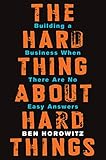
- Top pickThe Hard Thing About Hard Things by Ben Horowitz~$15
- Best budgetThe Midnight Library by Matt Haig~$13
- Worth the splurgeFull Focus Planner~$45
This isn't a "best biographies of all time" list. It's narrower and more useful than that: real people, real events, told with the pacing of a thriller. A couple of picks here technically live outside the biography aisle — a portrait collection, a self-help book stitched together from other people's near-disasters, a novel that does a biography's emotional work by different means — because the pacing is what matters, not the shelf label. I'll flag exactly what each one is doing so you're not surprised.
What actually makes a true story read like a thriller
It's not the subject matter. Plenty of books about spies and disasters and true crime are boring, and plenty of books about a mid-tier tech founder or a stranger on a New York sidewalk are riveting. The difference is structural. A thriller-paced true story withholds information on purpose — it opens closer to the crisis than the beginning, then loops back to explain how the person got there. It uses scene instead of summary: you're inside a specific room, on a specific day, instead of being told "the company struggled for the next two years." And it trusts a small number of vivid, specific details over an avalanche of context. The writer picked the one moment that matters and spent four pages on it instead of forty pages skimming the whole decade.
The five picks below all do at least one of these things well. None of them read like homework. Here's how each one earns its spot, and what to skip if this list doesn't quite deliver what you came for.
The startup near-death experience: The Hard Thing About Hard Things
Ben Horowitz's business memoir has a reputation as "required reading for founders," which undersells it — it's also just a genuinely tense book. The chapters about Loudcloud nearly running out of cash during the dot-com crash, about laying off a third of the company, about a CEO transition that could have ended the whole thing, read less like management theory and more like a survival story where the threat happens to be a bank balance instead of a storm. Horowitz doesn't sand off the panic. You feel the 2 a.m. phone calls. The advice is real, but the reason people finish it in a weekend is the plot.
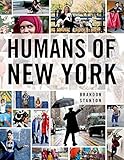
A thousand strangers, each their own cliffhanger: Humans of New York
This one isn't a biography in the traditional sense — it's a portrait book, a photograph and a few sentences of someone's life pulled from a sidewalk in New York. But here's the thing: Brandon Stanton figured out how to compress an entire arc of stakes, reversal, and resolution into three or four sentences, over and over, hundreds of times in one book. Read it front to back and it works like a thriller anthology — you never know if the next page is going to be funny, devastating, or both, and the not-knowing is exactly what keeps you turning pages. It's the book to hand someone who says they don't have the attention span for a 400-page biography. Every "chapter" is ninety seconds long and lands like a gut punch anyway.
The life you didn't live: The Midnight Library
Matt Haig's novel isn't a biography at all — it's fiction, and I'm including it deliberately, because it does something a straight biography structurally can't: it lets you watch one woman live out dozens of alternate versions of her own life, one after another, each with its own rise and near-collapse. It reads exactly like the thriller-paced biographies above, except the "research" is imagination instead of archives. If you've ever wondered what a biography of every choice you didn't make would look like, this is the closest thing that exists, and it moves faster than almost anything else on this list.
The case studies inside Atomic Habits are better than the framework
People buy Atomic Habits for the system — cue, craving, response, reward — and that's fine, the system works. But the reason the book is so readable, chapter after chapter, is that James Clear opens nearly every section with a tight, specific true story: the British Cycling team's improbable turnaround, a surgeon's checklist that saved an unthinkable number of lives, an athlete's single-decision pivot that changed a career. Strip out the framework and you'd still have a page-turning collection of high-stakes, real-world case studies. Read it for the habits. Stay for the stories, which are doing more narrative work than most self-help books even attempt.

The memoir buried inside a cookbook: Salt, Fat, Acid, Heat
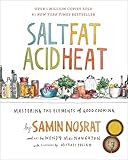
Samin Nosrat's book is shelved as a cookbook, and the recipes are genuinely excellent, but the connective tissue running through it is her own story — an unlikely path from a Berkeley dinner party into the kitchen at Chez Panisse, then into professional cheffing, told with the same specificity and momentum you'd expect from a proper memoir. It's the rare book that teaches you something concrete (how to actually season food) while quietly telling you a compelling personal history at the same time. If you've watched the Netflix adaptation, the book has more of her voice in it — the show is the highlight reel, the book is the director's cut.
What to skip if you actually want plot, not pointers
In the interest of being straight with you: not everything that shares a shelf with these books belongs on this list, and I'd rather tell you that up front than let you buy something expecting a page-turner and get a reference manual instead. Three books worth owning, but not for this particular craving:
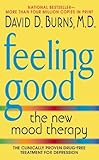
Feeling Good by David Burns is a genuinely excellent, evidence-based book on cognitive behavioral therapy, and if you're dealing with anxiety or depression it might be one of the more useful books you ever buy. But it's structured like a workbook, not a narrative — you're not going to stay up late turning pages. Buy it to use, not to read straight through.
The Full Focus Planner is a genuinely well-designed productivity planner, not a book with a plot at all, and I only mention it here because it tends to get recommended alongside "life-changing" nonfiction in the same breath as memoirs and biographies. It's a tool. A good one. But there's no story in it to get pulled into.
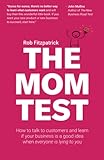
The Mom Test by Rob Fitzpatrick is a sharp, short, practical book about how to talk to customers without lying to yourself about what they actually want. It's one of the more useful startup books around — but it's instructional, not narrative. You'll read it with a highlighter, not under the covers.
None of these are bad books. They're just answering a different question than "keep me up past midnight." If that's what you came here for, the five above are the ones to buy first.
How to actually pick between these
If you want the closest thing to a business thriller, start with The Hard Thing About Hard Things — it has the clearest single-protagonist, single-crisis structure of anything on this list. If your attention span is fried and you want something you can pick up and put down in ninety-second bursts without losing momentum, Humans of New York is unmatched. If you want the emotional weight of a biography without the constraint of it having to be true, The Midnight Library gets there fastest. And if you're going to read a self-help book anyway, Atomic Habits at least respects your time enough to tell you real stories while it's making its case. Skip the other three unless you specifically need what they're for — a workbook, a planner, a customer-interview script — because none of them are trying to entertain you, and that's fine, that's not their job.
Frequently asked questions
What makes a biography or true story read like a thriller?
Structure, not subject matter. Thriller-paced true stories open close to the crisis and loop back to explain how the person got there, use specific scenes instead of broad summary, and trust a handful of vivid details over exhaustive context. It's a craft choice the writer makes, not something guaranteed by a dramatic life.
Is The Midnight Library really a biography?
No — it's a novel. It's included here because it does a biography's emotional work (watching one person's life play out under different choices) through fiction instead of research, and it reads with the same pace and stakes as the nonfiction picks on this list. If you want something true, start with The Hard Thing About Hard Things instead.
Is Humans of New York a biography?
It's closer to a portrait or oral-history collection — hundreds of short, real profiles rather than one sustained life story. It's on this list because each entry compresses a full arc of stakes and resolution into a few sentences, which functions like a thriller anthology even though no single story runs more than a page.
Should I read Atomic Habits for the stories or the framework?
Both, honestly, but if you're specifically here for narrative pacing, read it for the case studies — the British Cycling turnaround, the surgical checklist story, and similar high-stakes examples are what keep the pages moving. The habit-formation framework is useful on its own, but it's the stories that make the book hard to put down.
Why include Feeling Good, the Full Focus Planner, and The Mom Test if you're telling me to skip them?
Because they're genuinely good at what they do, and because they get recommended in the same breath as narrative nonfiction often enough that it's worth being clear about the difference. All three are worth owning for their actual purpose — therapy tool, planner, startup guide — just not for the thriller-paced reading experience this list is built around.
What should I read next if I finish all of these?
Look for narrative nonfiction and memoir built around a single sustained crisis rather than a full life span — books about one expedition, one company, one court case, or one disaster tend to keep the thriller pacing intact. Anything where the writer had to compress years of research into a story with a clear beginning, escalating stakes, and an ending is a good bet.