You have the ideas. You've probably had them for years: a sharp take on your industry, a weekly walk through the news nobody explains well, a series of essays that would make a lovely half hour in someone's earbuds. What you don't have is a voice you can stand to listen to. Maybe the mic makes your throat tighten. Maybe you hate your accent, or you've been told you "sound young," or you cringe at every playback of yourself. So the idea stays in a notes app, and somebody with a worse idea and a more confident voice gets the audience.
There is a quieter route now. Narration generated from your script, in a voice you choose, published under your name. It isn't a magic trick and it isn't right for every show, but for a specific kind of podcast it removes the one obstacle that was never about your ideas in the first place. Here's how to do it well, how to be honest about it, and where a human voice still wins.
Hear your own script read back
Paste a paragraph of your actual writing into ElevenLabs and audition a few voices. The free tier gives you about 10,000 characters a month, enough to know whether this fits before you commit to anything.
Try ElevenLabs free →Which shows suit an AI narrator (and which don't)
The formats that work best are the ones where a single voice delivers prepared material. Think of three families.
The essay show. One idea, ten minutes, a beginning and an end. Personal essays, opinion pieces, book commentary. This is basically a written piece with a delivery layer, which is exactly what a narrator is for.
The explainer. How a thing works, why a thing happened, what you need to know before the thing. History, money, science, local politics, a hobby you know too well. These live or die on clarity, and clarity comes from the script, not from vocal charisma.
The roundup. A weekly news digest in your niche: five stories, your commentary, out in nine minutes. The value is your curation and your point of view. Nobody subscribes to a roundup for the host's laugh.
What these share is that the listener came for the information and the thinking. If that describes your idea, a synthetic narrator is a reasonable tool. If your idea is really "me talking with interesting people," skip ahead to the section on when to use your own voice, because this isn't your format.
Write for the ear, not the eye
This is the part that separates shows people finish from shows people abandon, and it matters whether the voice is yours or generated. Text written to be read silently falls apart when spoken. A few rules that do most of the work:
Keep sentences short enough to say in one breath. If you run out of air reading it aloud, a listener runs out of attention hearing it. Put the subject near the front, because a listener can't skim back up the page. Repeat key names and terms rather than leaning on "it" and "they," since nobody can glance back to check what "they" meant. Kill parentheses; either the aside matters enough to be a sentence or it goes. Spell out numbers and abbreviations the way you want them spoken, and respell the odd name phonetically if a render stumbles on it.
Then do the thing that feels silly and is non-negotiable: read the script out loud yourself, once, quietly, before generating anything. You'll find the clunky sentence in four seconds. Synthetic voices are good at inflection, but they can't rescue a sentence that no human would ever say. Questions rise, lists get rhythm, and paragraph breaks become natural pauses, so use your paragraph breaks as stage directions.
Structure helps too. Open with the point of the episode in a sentence or two. Signpost transitions out loud ("that's the history; now the part that affects you"). Close with one takeaway. Solo audio has no guest to rescue a sagging middle, so the script has to hold the weight.
Choosing a voice you can live with
Treat this like casting, because it is. Your narrator is the sound of your brand for the next fifty episodes. ElevenLabs has a large library you can sort by accent, age, and tone, and the free tier lets you test with your own words instead of the canned demo lines, which matters enormously. A voice that sparkles on a sales demo can feel wrong reading a quiet essay.
Audition at least three voices on the same sixty seconds of your real script. Listen on headphones, not laptop speakers. Ask what the voice makes the material feel like: warm and conversational for personal essays, brisk and clear for explainers, lower and slower for anything reflective. Then pick one and stop shopping. Switching narrators every few episodes confuses listeners the same way a logo change would.
A word on the accent and voice-insecurity angle, since it's the real reason many people are here. Choosing a different voice is not cheating, and it is not a confession of failure. It's a production choice, the same as hiring a narrator for an audiobook or using a pen name. What matters is that you're honest about it, which brings us to the part many guides skip.
If you'd rather the narrator sound like you, ElevenLabs offers instant voice cloning from the $5 Starter tier, with a commercial license on paid plans. That's a different decision: some shy hosts hate their recorded voice but are fine with a polished version of it, and some find a clone more uncomfortable than a stranger's voice. Try the free tier first and notice your own reaction.
Be upfront with listeners
We won't tell you listeners can't tell the difference, because it isn't a promise anyone can make. Some will notice, some won't, and the ones who feel deceived afterward are the ones you lose permanently. The simple answer is to say it plainly, and it costs you almost nothing.
Put one line in your show description: "Narrated with an AI voice; scripts written and edited by me." Say it in the first episode's intro and in an "about" episode that explains why you made the choice. Many listeners respond well to the explanation, particularly if it's the true one: you have ideas worth hearing and a voice you'd rather not use. Some platforms and directories have their own disclosure expectations and those policies change, so check the current rules wherever you publish. A short, calm sentence is also a better look than a defensive one.
Two honesty rules we'd hold ourselves to. Never clone or imitate someone else's voice without their permission, and never present a synthetic narrator as a human with a fabricated backstory. Your credibility is the actual product here.
Editing basics for a solo narrated show
Render in sections. Generate by segment, not as one monolith. When one name is mispronounced, you re-render a paragraph instead of the entire episode. It also keeps you inside your monthly character budget. Remember that 10,000 characters is roughly ten minutes of audio, so plan your episode length against your tier before you write a forty-minute script.
Level it and listen on real gear. Any free editor will normalize loudness. Then listen through headphones you trust and again on your phone speaker, because that's where half your audience is. You're listening for a rushed sentence, an odd emphasis, a spot where the delivery doesn't match your meaning. Re-render those lines and move on.
The two pieces of gear actually worth buying
You don't need a microphone, a booth, or a pop filter. You do need to hear your work accurately, and that's the one place spending money pays off.
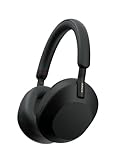
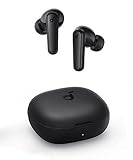
If you want a serious review setup, noise-cancelling over-ear headphones let you catch clipped words and awkward pauses without room noise masking them. If you want the cheap version, a decent pair of earbuds is enough to proofread an episode on a commute. Both are optional, and only worth it if you'll publish regularly.
When a human voice is still the better call
Here is the what-to-skip list, and we mean it. Some formats belong to a real person.
Interviews and conversation. The magic is two people reacting in real time: the laugh, the interruption, the half-second hesitation before a hard answer. A scripted synthetic voice can't be one half of that, and a guest will notice. If your show is a conversation, work on the mic fright instead, because it's more fixable than it feels. Record with a friend first, in a closet full of clothes, and nobody has to hear the early takes.
Intimacy and testimony. Grief essays, memoir, anything where the audience is there for you specifically. If the point of the show is "this is what it was like for me," a borrowed voice puts distance between you and the listener right where you want closeness. Some hosts do both: scripted explainers in a synthetic voice, and a short personal note in their own at the start or end.
Give your ideas a voice, free
Start with the free tier: about 10,000 characters a month, a deep voice library to audition from, and no card required to find out whether it fits your show.
Create a free account →Frequently asked questions
Can listeners tell the narration is AI?
Sometimes yes and sometimes no, and it varies by listener, voice, and script. We wouldn't plan around them not noticing. Disclose it in your show description and first episode, and you won't have to worry about the answer.
Do I have to disclose AI narration?
Honesty with your audience says yes, and some platforms have their own disclosure expectations that change over time. Check the current rules on any directory or host you publish through, and add a plain line to your show notes.
Can I use ElevenLabs audio in a podcast I monetize?
Paid tiers include a commercial license, starting with the $5 Starter plan. The free tier is for non-commercial use and requires attribution, so move to a paid tier before you monetize.
How long an episode can I make on the free tier?
The free plan includes about 10,000 characters a month, which is roughly ten minutes of audio. That's enough to test a script and a voice, but a weekly show will want a paid tier.
Can the narrator sound like me instead of a stranger?
Yes. Instant voice cloning from a short sample is available from the $5 Starter tier, with identity verification required. Try it only with your own voice, and only if the idea feels comfortable to you.