Somewhere in the last few years, the "free" part of flying quietly shrank down to one bag. Carry-ons now cost $35–75 on most budget carriers and increasingly on legacy ones too, checked bags cost more than that, and the only thing every airline still lets you bring at no charge is a single personal item that fits under the seat in front of you. That's not a loophole. It's the new baseline. Which means the bag you choose for that one free slot is doing more work than any suitcase you've ever bought — and most bags marketed for travel are built around carry-on dimensions, not personal-item ones, which is exactly why they get flagged at the gate.
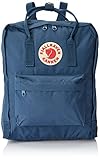
- Top pickFjällräven Kånken Classic Backpack~$80
- Best budgetMaster Lock TSA-Accepted Combination Lock~$10
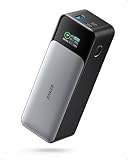
- Worth the splurgeAnker 737 PowerCore 24K~$130
Why the personal item line matters more than your carry-on now
Budget airlines figured out years ago that "free checked bag" sounds generous and "free bag that fits under the seat" sounds stingy — so they kept the second one free and started charging for everything bigger. Spirit, Frontier, Allegiant, and increasingly Delta Basic Economy and United Basic Economy all draw the same hard line: one personal item, no charge, everything else costs money at booking or a lot more money at the gate. The personal item allowance typically runs somewhere around 18 x 14 x 8 inches, though the exact numbers shift by a couple of inches depending on carrier, and gate agents at low-cost airlines are trained to use a sizer box, not a tape measure and a shrug.
The instinct is to just bring a slightly smaller version of your usual carry-on backpack. That's the mistake. Most "travel backpacks" are built to max out carry-on dimensions (roughly 22 x 14 x 9), which means they're 3–4 inches too tall or too deep the moment you try to pass them off as a personal item. The bags that actually work in this slot are a different category entirely — built shorter and flatter on purpose, not a carry-on that happens to look smallish in a product photo.
The bag that actually fits: structured, flat-backed, and honest about its size
The single best trait in a personal item bag isn't capacity — it's a fixed, predictable shape. A soft, floppy tote can technically hold more, but it also bulges when it's full, which is exactly when a gate agent decides to eyeball it against the sizer. A structured bag with a flat base and flat back panel holds its dimensions whether it's half-full or stuffed, and that consistency is what gets you waved through without a second look.
The Fjällräven Kånken is the unofficial poster child of this category for a reason. It's a classic 16-liter backpack with a boxy, almost briefcase-like shape, a wide flat base that sits upright under a seat instead of tipping over, and vinyl fabric that doesn't sag or billow the way canvas does when it's packed to the top. It comfortably clears the personal item sizers on Spirit, Frontier, and Allegiant with room to spare, and it looks like a normal daypack rather than something engineered to game an airline policy — which matters, because bags that look like they're trying too hard to squeeze through a loophole get scrutinized harder.
The second-bag trick most flyers don't know is allowed
Here's the part almost nobody uses to their advantage: "one personal item" doesn't mean one bag has to hold everything for the whole trip — it means one bag has to be your visible personal item at boarding. A packable tote that folds down to the size of a fist, tucked inside your structured backpack during boarding, becomes a second free bag the moment you're seated and it comes out from under the seat as a lap bag, or gets used at your destination as an actual day bag. Airlines don't police what you do with your belongings once you're through the gate — they police what's visibly separate from your one personal item at the moment they're checking bags.
A nylon crescent or shopper-style tote is the right tool for this because it weighs almost nothing and adds zero bulk to your structured bag while it's folded up. Stuff a few days of extra clothes, a paperback, or souvenirs into it and it becomes genuinely useful cabin space that never shows up as a second bag on the jet bridge.
What to skip: the bags that get gate-checked more than they should
A few categories consistently fail the personal-item test, and it's worth knowing them before you buy rather than after a gate agent makes you check something you didn't budget for. Skip anything marketed as a "22-inch carry-on backpack" for this purpose — those numbers describe carry-on dimensions, not personal item ones, and the gap between them is exactly the gap that gets flagged. Skip expandable backpacks with a zip-out bottom panel; the extra capacity is real, but so is the extra 2–3 inches it adds the moment you unzip it, and a bag measured with the expansion closed can still get rejected if a gate agent notices the zipper. And skip soft-sided duffels with no internal structure — they're comfortable to carry and genuinely roomy, but they're also the bags most likely to bulge past their stated dimensions the second they're actually packed for a trip, which is the worst possible moment to discover that.
The pattern across all three: a bag that's honest and consistent about its size beats a bag that's technically compliant only when it's underpacked.
Fitting more into a fixed exterior: cubes and compression are the real allowance hack
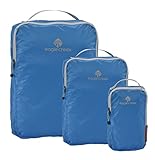
Once you've locked in a bag with fixed, predictable dimensions, the only way to fit more is to organize what's inside it more efficiently — you can't grow the outside, so you have to shrink the inside. This is where packing cubes stop being a nice-to-have and start being the actual mechanism that lets an 18 x 14 x 8 bag do the work of something bigger. Compression cubes with a second zipper that squeezes the air out of folded clothing can realistically reclaim 20–30% of usable volume compared to just stuffing clothes in loose, and they keep everything organized enough that you're not unpacking the whole bag at security to find one shirt.
For soft, compressible items specifically — a jacket, a sweater, anything down or fleece — a vacuum-seal compression bag goes even further, since it removes air entirely rather than just squeezing fabric into a firmer shape. You don't need a pump for travel-size versions; rolling out the air by hand works fine for a single bulky item tucked into an otherwise tight personal item bag.
Toiletries and cables: the stuff that actually eats your allowance
Clothes compress. Toiletries and electronics don't, which is why a poorly organized toiletry kit or a tangle of loose cables can quietly claim as much space as three days of clothing. A flat, hanging toiletry bag solves two problems at once: it keeps liquids contained and TSA-compliant, and its slim profile means it lies flat against the back panel of a structured backpack instead of becoming a lump that fights the bag's shape — which, as covered above, is exactly what gets a bag flagged as oversized at the gate.
Pair it with a real set of TSA-compliant travel bottles rather than the miniature toiletries hotels or drugstores sell — the leak-proof ones with silicone seals mean you're not also budgeting bag space for a gallon zip-top bag lined with paper towels in case something bursts.
Two small additions that solve real personal-item problems
A power bank deserves specific mention here because of an FAA rule most people don't know until it's a problem: lithium battery power banks are not allowed in checked luggage at all, only in carry-on or personal item bags. If your one free bag is your only bag, that power bank has to live in it — which makes a slim, high-capacity one worth the space it takes, since a dead phone mid-layover is its own kind of expensive. And a small TSA-approved lock is worth the two ounces it adds; a personal item bag that lives under the seat in front of a stranger for a multi-hour flight is exactly the bag you want zipped shut and locked, not the suitcase that goes into checked cargo where a lock arguably matters less.
None of this requires an expensive bag or a suitcase engineered by aerospace consultants. It requires a structured bag with dimensions you actually trust, a packable second bag folded inside it for the moment you're through the gate, and cubes or compression bags doing the real work of fitting more into a space that can't get any bigger. Do that and the free personal item stops being the consolation prize of modern flying and starts being genuinely enough bag for a long weekend — sometimes longer.
Frequently asked questions
What are the actual personal item size limits?
It varies by airline, but most cluster around 18 x 14 x 8 inches. Spirit and Frontier use roughly those numbers with a physical sizer at the gate; Allegiant is similar; Delta, American, and United don't publish exact enforced dimensions for basic economy personal items but generally expect something in the same range — think a bag that visibly fits under the seat in front of you, not just technically. When in doubt, check the specific airline's website before you fly, since gate agents enforce their airline's number, not a universal standard.
Can I really bring a second folded bag as a "personal item"?
You get one personal item that has to be visibly separate and shown at boarding — you can't carry two bags through the gate and call one of them part of the other. The trick is packing a lightweight, foldable bag inside your structured personal item bag so it's not visible or separate at boarding, then using it once you're seated or at your destination. Airlines aren't checking what you do with your belongings after boarding, only what's presented as a distinct bag at the gate.
Do packing cubes actually save meaningful space, or is that marketing?
Compression cubes with a second "squeeze" zipper genuinely reclaim 20–30% of usable volume compared to loose-packed clothing, because most of the wasted space in a stuffed bag is trapped air between folded layers, not the fabric itself. Basic non-compression cubes mainly help with organization rather than volume. For a personal-item-only trip, the compression style is worth the extra few dollars.
Why do backpacks marketed as "carry-on size" so often fail as personal items?
Because carry-on and personal item are two different, larger and smaller, size categories, and a bag built to max out carry-on dimensions (commonly around 22 x 14 x 9 inches) is built 3-4 inches too big in at least one dimension to pass as a personal item. Some backpacks are genuinely built to the smaller personal-item spec — check the bag's actual listed dimensions against your airline's stated limits rather than trusting marketing language like "fits most airlines."
Can a power bank go in checked luggage instead, to save space in my personal item?
No — this is an FAA/TSA safety rule, not an airline policy, so it applies everywhere. Lithium battery power banks and spare batteries are prohibited in checked luggage because of fire risk, and must travel in the cabin with you, either in a carry-on or a personal item. If your personal item is your only bag, the power bank has to fit in it; there's no workaround.
Is it worth buying a bag specifically for personal-item travel, or can I just use what I have?
If you already own a structured, flat-based bag with known dimensions under roughly 18 x 14 x 8 inches, you don't need to buy anything new. The reason a dedicated pick like the Kånken gets recommended so often is that it's one of the few widely available backpacks that's honest about staying within that size even fully packed — a lot of bags that look similar in photos are actually built to carry-on dimensions and only pass the eyeball test when they're half-empty.