Every "best noise-canceling headphones" roundup on the internet is secretly a headphones-for-flights article wearing a different headline. Which makes sense — most of those lists were written by people testing engine drone at 35,000 feet, not the specific, low-grade psychological warfare of an open-plan office: someone's Zoom call bleeding through their earbuds, the guy two desks over who narrates his Slack messages out loud, the espresso machine, the person who reheats fish. That's a different noise profile than a jet engine, and it needs a different kind of headphone.
- Top pickSony WH-1000XM5 Wireless Headphones~$398
- Best budgetSoundcore by Anker P3i ANC Earbuds~$45
This isn't that other article. If you want a home-listening or travel ANC ranking, we've got one of those — the honest budget-tier breakdown lives at Noise-Canceling Headphones Worth Buying at Every Budget. This one is specifically about surviving eight hours a day at a shared desk: blocking the right noise without cutting yourself off from your team, staying comfortable long after the "just tried them on" honeymoon period ends, looking like a professional on video calls instead of a hostage situation, and not needing a charging break at 2pm.
Open-office noise isn't loud, it's constant — and that changes what you need
An open office is rarely deafening. It's just relentless: keyboard clatter, a nearby conversation your brain can't help but half-listen to, HVAC hum, someone's ringtone. Active noise cancellation (ANC) is specifically good at flattening exactly this kind of steady, mid-and-low-frequency noise — it's less effective against sudden sharp sounds and largely useless against human speech at close range, which is why you'll still hear your neighbor's phone call even with great ANC on. What ANC actually buys you in an office is the removal of the background hum so your brain stops working overtime to filter it out, which is most of what causes end-of-day mental fatigue in open floor plans.
The practical takeaway: you're not shopping for "strongest ANC" as an abstract number. You're shopping for ANC that's tuned for exactly this kind of ambient, droning, unpredictable-in-small-ways noise — and, just as important, for a mode that lets that noise back in on command.
The shoulder-tap problem: why total isolation backfires at a desk
On a plane, disappearing completely into your own head is the whole point. At a desk, it's a liability. Someone needs to loop you into a hallway conversation, your manager stops by, a coworker needs the stapler back. If your headphones create a full sensory blackout, you become the person who gets tapped on the shoulder, flinches, and then has to apologize for looking startled — multiple times a day, in front of people you work with.
This is where transparency or "ambient sound" modes matter more in an office than almost anywhere else. A quick tap should let outside sound back in without you removing the headphones, fumbling for a pause button, or missing the first half of whatever someone's saying. The Sony WH-1000XM5 is the gold standard here — its ambient mode is genuinely usable rather than a checkbox feature, it adjusts automatically when it detects you're speaking, and switching between full ANC and transparency is a single tap on the ear cup, not a menu dig.
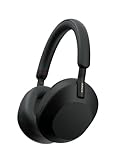
That auto-detection matters more than it sounds. It's the difference between an office headphone that makes you seem plugged-in-and-unreachable versus one that quietly manages the transition for you, so you're not the person everyone has learned to wave at from across the room before approaching.
All-day comfort is a completely different test than a flight
Most ANC headphone reviews test comfort across a four-to-six-hour flight, worn continuously, usually while seated. An office day is longer, interrupted, and involves a wider range of motion — turning to talk to someone, leaning over a desk, walking to a meeting room with your headphones still on. Clamping force that feels fine for a movie becomes a headache by hour six. Ear cup material that's comfortable in a cool cabin gets sweaty under office lighting and a space heater under your desk.
The Bose QuietComfort 45 earns its reputation specifically on this axis. Bose has always prioritized a lighter clamp and softer cushioning over squeezing out the last percentage point of ANC performance, and for an eight-hour desk day, that tradeoff is the right one. They also fold flat and weigh noticeably less than most premium ANC headphones, which matters when you're wearing them, taking them off for an in-person conversation, and putting them back on a dozen times before lunch. If your primary complaint with other ANC headphones has been a sore jaw or hot ears by mid-afternoon, this is the fix.
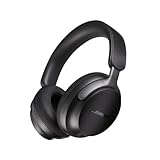
Between these two, the honest advice is: try them on if you can, because clamping force preference is genuinely personal. But if you already know you run warm or have a smaller head, lean Bose. If ANC strength and that auto-transparency trick matter more to you than a few grams of weight, lean Sony.
Looking — and sounding — professional on video calls
Open offices and video calls are a bad combination on their own, and the headphones you pick either help or make it worse. Big, over-ear ANC headphones can look faintly ridiculous framed in a webcam box next to your coworkers' bare heads, and more importantly, the microphones built into headphones are usually an afterthought — they're tuned to cancel your own background noise passably, not to make you sound clear on someone else's end.
There's also a stranger issue that catches people off guard: occlusion. When your ears are sealed by ANC cups, you can't hear your own voice the normal way sound travels through your skull and jaw, so people on calls often start talking louder than they realize, which is its own kind of open-office noise pollution aimed at everyone around them. The fix isn't complicated — it's being aware of it, and it's a real reason to route your actual voice through a dedicated microphone rather than trusting the headphone mic to do that job on top of noise cancellation.
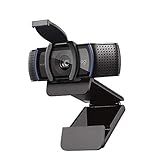
This is where a real webcam earns its spot on this list even though it's not a headphone. If you're taking calls from your desk, a dedicated webcam like the Logitech C920s does two things your laptop's built-in camera and headphone mic can't: it puts a genuinely better microphone near your mouth instead of relying on whatever's built into your headphones, and it makes you look like you're sitting in a proper room instead of a grainy laptop-lid tunnel. Paired with either headphone above, it closes the gap between "sounds like they're wearing headphones in a call center" and "sounds like they're actually in the room with you."
Battery life: the one spec that actually gets tested by a real workday
A flight has a natural endpoint. A workday doesn't — and if your headphones die at 3pm because you forgot to charge them overnight, you're stuck either going without ANC for the rest of the day or hunting for a cable that fits. Both premium over-ear picks above comfortably clear a full 8-to-10-hour day and then some, with the Sony rated around 30 hours with ANC on and the Bose around 24, so a single missed overnight charge won't strand you.
Earbuds are the trickier category for this exact reason, and it's worth being honest about the tradeoff before you buy a pair for office use. Most ANC earbuds, including genuinely good ones, top out at 6-to-8 hours per charge before the case comes back into play — which means an office day usually needs at least one mid-afternoon case top-up, not just a morning charge. The Soundcore P3i is one of the better options in this category if you'd rather have earbuds than over-ear headphones for space or style reasons: real ANC across several intensity levels, a mic that's noticeably better than typical budget earbuds, and a case that gets you through most of a day even with one recharge stop.
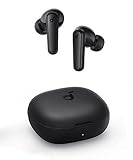
If you know your days run long and unpredictable — back-to-back meetings, no natural break to duck to your bag for the case — over-ear wins on battery math alone. If you value how they look and feel more than squeezing out every last hour, earbuds are a legitimate choice, you just need to build the case top-up into your routine the way you'd remember to refill a water bottle.
What to skip: cheap ANC earbuds and other open-office traps
Sub-$30 "ANC" earbuds are the single most common wasted purchase in this category. Below a certain price point, the noise cancellation is often little more than passive isolation with a marketing sticker — a rubber tip blocking some sound, plus a chip that does the bare minimum of active canceling on the lowest, most generic frequencies. In an open office, where the annoying part isn't a jet engine hum but mid-frequency chatter, weak ANC barely registers, and you've spent money solving a problem you still have.
Also worth skipping for office use: gaming headsets, even good ones. They're usually built for isolation over a long solo session, with bulky ear cups, an always-on boom mic that looks strange in professional meetings, and little to no transparency mode — exactly the total-blackout design that causes the shoulder-tap problem from earlier. And plain closed-back headphones with no ANC at all, marketed vaguely as "great for the office," do block some sound passively, but they can't touch the steady hum-and-chatter combination that active cancellation is specifically built to handle. If a listing doesn't clearly state real ANC with adjustable levels and a transparency mode, assume it's passive isolation wearing ANC branding, and keep looking.
The honest bottom line: for a real open office, spend on genuine ANC with a fast, reliable transparency mode, prioritize comfort for the hours you'll actually wear them rather than the hours in a marketing photo, and treat battery life as a workday-length problem, not a flight-length one. Get those three right and the noise around you stops being something you fight all day and starts being something you can just tune out — or tune back in, the second someone taps your shoulder.
Frequently asked questions
What's the actual difference between this and a general "best ANC headphones" list?
A general list optimizes for flights and travel — the loudest, steadiest noise, worn for a few hours with no interruptions. This one optimizes for a shared desk: comfort across a full 8-hour day, a fast transparency mode so you don't miss a coworker, a mic that sounds good on calls, and battery life measured in workdays rather than flights.
Should I get over-ear headphones or ANC earbuds for the office?
Over-ear headphones (Sony WH-1000XM5 or Bose QC45) win on battery life and ANC strength for a full unbroken workday. ANC earbuds (like the Soundcore P3i) are lighter, less conspicuous, and easier to pop out for a quick conversation, but most need a mid-afternoon case top-up. Pick over-ear if your days are long and unpredictable; pick earbuds if comfort and low profile matter more than squeezing out every hour.
Will noise-canceling headphones make me miss important things, like being tapped on the shoulder?
Only if you buy headphones without a fast, reliable transparency mode. Both the Sony WH-1000XM5 and Bose QC45 let outside sound back in with a single tap or gesture, and the Sony automatically lowers music when it detects you speaking. The real risk is buying headphones marketed purely on isolation strength with no thought given to switching that off quickly.
Do I really need a separate webcam if I already have good headphones?
If you take video calls from your desk regularly, yes — for a different reason than you'd expect. ANC ear cups create an occlusion effect where you can't hear your own voice normally, so people tend to talk louder without realizing it. A dedicated webcam like the Logitech C920s puts a real microphone near your mouth instead of relying on the headphone mic, which fixes both the sound quality on the call and the "why is everyone talking so loud" problem in the office around you.
Are cheap ANC earbuds under $30 worth it for an office?
Generally no. Below roughly $30, "ANC" is often closer to passive isolation with a chip doing minimal active canceling on the lowest, most generic frequencies. Open-office noise is mid-frequency chatter and clatter, which is exactly what weak ANC struggles with, so you end up with earbuds that block almost nothing extra beyond the silicone tip itself.
How long should office ANC headphones last on a single charge?
Aim for at least 20+ hours with ANC on for over-ear headphones, which covers 2-3 full workdays without a charge. For ANC earbuds, expect 6-8 hours per charge plus a case that adds another 15-25 hours — enough for a workday if you top up the earbuds in the case during lunch or a meeting.