Here is the fastest way to find out what is wrong with your novel: stop reading it and listen to it. Your eyes forgive almost everything. They skip the repeated word, glide over the clunky dialogue tag, and fill in the pacing you meant instead of the pacing you wrote. Your ears forgive nothing. Making an audiobook of your own draft with an AI voice takes an afternoon for a first chapter, costs nothing to test, and tells you more about your book than another silent read-through ever will. This is the workflow we would actually follow, including the parts that are tedious.
Hear your first chapter read aloud
ElevenLabs has a free tier (about 10,000 characters a month, no card required) that is enough to render a scene or two of your own manuscript and judge the voice for yourself. Paste in your opening page and listen.
Try ElevenLabs free →First, be clear about what this is for
An AI-narrated draft is a working tool. It is brilliant for three jobs: revising your own manuscript, giving beta readers a way to experience the book on their commute, and making a private audiobook you can listen to on a walk. It is not the same thing as a finished, retail-ready audiobook. Retailers and audiobook platforms each have their own rules about AI narration, disclosure, and quality, and those rules change. If you ever hope to sell your audio, check each retailer's current AI-narration policy before you spend a minute on production, and do not assume a file that sounds good will be accepted. We are not going to promise you distribution here, because nobody honest can.
With that settled, the creative upside is large. Authors who hear their book aloud routinely report that they cut a chapter, fix a dead scene, or realize their protagonist says the same four phrases in every argument. A human narrator costs real money to hire for that kind of experiment. A draft render costs a few minutes.
Step one: prep the manuscript for audio
A manuscript built for the page needs light surgery before a voice reads it. Do this in a copy of your file, never the original.
- Strip the front and back matter. Copyright pages, dedications, acknowledgments, and the table of contents do not belong in your first test. Add a simple spoken title and chapter number later.
- Fix the things only eyes can read. Section breaks marked with asterisks, footnotes, text-message formatting, emoji, and unusual typography will confuse a voice. Turn a scene break into a blank line or a short sentence like a pause.
- Spell out the awkward. Numbers, abbreviations, and dates that should be spoken a certain way are better written out. "St." could be Street or Saint, and the voice has to guess.
- List your problem names. Invented place names, fantasy character names, and borrowed-language words are where AI voices trip. Keep a short list. When a render mispronounces one, respell it phonetically in the render copy only. It feels silly, and it works.
- Read your dialogue tags aloud once. A page can carry six "he said, quietly, turning away" tags in a row. Spoken, they become a metronome.
Keep paragraph breaks generous. Modern AI voices treat them as natural pauses, and a wall of unbroken text comes out as breathless narration.
Step two: choose your voices, narrator versus characters
This is the creative decision that matters most, and the answer for a first draft is simpler than you would think. Choose one narrator voice and commit.
Think about who is telling the story. A close-third literary novel wants something warm and even-paced. A thriller wants measured and slightly lower, with room to speed up. A romance narrated in first person wants a voice you could imagine saying "I" without it sounding like a news bulletin. ElevenLabs has a large voice library you can search by accent, age, and tone, and because the free tier lets you test with your own paragraphs rather than canned demos, you can audition honestly. Take one page that contains description, dialogue, and an emotional beat, and run it through four or five voices. The right one tends to announce itself.
Now, the character voices question. Resist the urge to give every character a unique voice on your first pass. Multi-voice production is real work: you have to mark up every line of dialogue, render them separately, and stitch them together in order, and for a full novel that is a very large editing job. A single good narrator who lets the dialogue carry the characters is what most human audiobooks do, and it is a perfectly good way to hear your book.
Where a second or third voice does earn its place is a short list of situations:
- A dual-narrator novel, where two points of view alternate by chapter. Give each POV its own voice and the structure becomes audible.
- Epistolary pieces such as letters, transcripts, or messages, where a change of voice signals a change of source.
- A single character who speaks in a very distinct way and appears in many scenes.
Whatever you choose, write down the voice and settings in a note and reuse them. Consistency from chapter to chapter is what makes the result feel like one book rather than a stack of clips.
Step three: render chapter by chapter
Do not paste a whole novel into a text box. Work in chapters, or in half-chapters for long ones. Shorter renders are easy to re-generate when you catch a problem, they keep your file management sane, and chapter-sized audio files are the unit every podcast app and audiobook player expects anyway.
Budget before you begin, because characters add up quickly. A typical novel runs several hundred thousand characters, which is far beyond the free tier. The free allowance is for auditioning, not for producing a whole book. Plan on testing a chapter free, then deciding which paid tier fits your timeline. The $5 Starter tier (30,000 characters, a commercial license, and instant voice cloning) suits short projects and sample chapters; the $22 Creator tier (100,000 characters, higher-quality renders, and projects that handle long scripts cleanly) is built for the volume a full manuscript demands. Check the current plan page for exact limits before you commit, since plans change, and spread a long book over a few months if that fits your budget better than one big upgrade.
A sensible order of operations:
- Render your opening chapter first. It sets the voice, and it is the one you will be most anxious about.
- Render the chapter you suspect is weakest. Hearing it will confirm your suspicion, and probably tell you why.
- Render one dialogue-heavy scene and one action scene, to see how the voice handles each.
- Only then render the rest, in order, with the same settings.
Step four: proofread by ear
This is where the project pays for itself. Listen to each chapter with the text open next to you, and mark anything that makes you wince. You are listening for a short list of problems:
- Repetition. The same word or image twice in a paragraph is nearly invisible on the page and glaring in audio.
- Dialogue that nobody would say. If the voice sounds stilted reading a line, the line is probably stilted. Read it aloud yourself.
- Pacing sags. A scene that makes you want to skip ahead has the same effect on a reader.
- Sentence length. A run of four long, clause-heavy sentences leaves the narrator, and you, out of breath.
- Render errors. A mispronounced name or a misread word is a fix to the render copy, not to your manuscript. Keep those two kinds of notes separate or you will edit your book to please the software.
Revise the real manuscript for the first four, fix the render copy for the last one, and re-render only the affected chunk. That tight loop is the whole advantage over hiring a narrator.
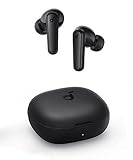
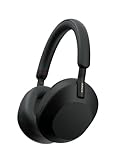
One practical note on listening gear. If you are going to spend hours proofreading by ear, comfort matters, and a few kinds of headphones are worth thinking about. Here are two that fit the job at very different budgets.
What to skip
A few things that look productive and are not, at least at the draft stage:
- Skip cloning your own voice for a first pass. It is a real feature, available on the $5 tier and up with identity verification, but it adds setup, and your priority right now is hearing the story, not hearing yourself. Come back to it if you decide the audio matters long-term.
- Skip polishing the audio before you polish the book. If you are still restructuring chapters, every render is going to be thrown away. Render stable chapters.
- Skip assuming retail distribution is a given. Read each platform's current rules on AI narration first. They differ, and they change.
The honest verdict
You do not need to turn your novel into a retail audiobook to benefit from this. The point of listening to a draft is that it exposes problems you cannot see, and it does it quickly and privately. Start with one chapter, spend twenty minutes auditioning voices against your own pages, and listen with the text beside you. If the first chapter teaches you one thing about your book, you have already got your money's worth from a free account.
Start with the free tier
About 10,000 characters a month and no card required: enough to hear a chapter and decide whether this belongs in your revision routine. Check the current plans for what a full manuscript will need.
Create a free account →Frequently asked questions
Can I make an audiobook of my novel for free?
You can test it for free. ElevenLabs' free tier includes about 10,000 characters a month, which covers a short chapter or a scene. A full novel is far larger than that, so a complete book will need a paid plan or a long stretch of free-tier months.
Can I sell an audiobook made with an AI voice?
That depends entirely on where you want to sell it. Each retailer and audiobook platform sets its own policy on AI narration, including disclosure and quality, and those policies change. Check each one's current rules before you plan on distribution, and do not treat a draft render as retail-ready.
Should I use different voices for different characters?
For a first draft, usually not. One good narrator is how most audiobooks work, and it keeps editing manageable. Extra voices make sense for alternating points of view, letters or transcripts, or one very distinctive recurring character.
How do I stop the AI mispronouncing my character names?
Respell the name phonetically in the copy you render, not in your real manuscript. It feels odd, but it works. Keep a short list of problem names so you apply the same spelling in every chapter.
Is this a replacement for hiring a human narrator?
No. It is a revision and listening tool. A human narrator brings performance, interpretation, and character work that a draft render does not. Many authors use an AI draft to hear the book first and decide later what, if anything, to do with professional narration.