The Instant Pot had its viral moment around 2017, calmed down, and then did something most kitchen fads don't: it stuck around. Not because of the marketing — the marketing was always a little overblown, "7-in-1!" plastered on a box that mostly does two things really well — but because a pressure cooker that also slow cooks, sautés, and steams genuinely earns counter space in a way an air fryer oven with eleven attachments doesn't. The problem isn't the Instant Pot itself. It's the accessory aisle that springs up around it the second you buy one. Cake pans shaped like the inner pot. Egg racks. Silicone mitts branded with the logo. Most of it is stuff you'll use twice and then store in a drawer forever.
- Top pickInstant Pot Duo 7-in-1 6qt~$79
- Best budgetOXO Good Grips POP Container (3.4qt)~$16
- Worth the splurgeCosori Pro II 5.8qt Air Fryer~$90
This is the honest version: which Instant Pot to actually buy, what's genuinely useful once it's on your counter, and which accessories are solving a problem you don't have.
The honest quick answer
Buy the Instant Pot Duo 7-in-1, 6-quart. Not the Duo Crisp, not the Duo Evo Plus, not the Pro Plus with the app connectivity nobody uses after week two. The base Duo has been the best-selling pressure cooker on Amazon for the better part of a decade for a simple reason: it does pressure cooking, slow cooking, sautéing, steaming, and rice-making without a touchscreen to figure out or a $30 replacement part you'll need in year three. The "7-in-1" branding oversells it a little — realistically you'll use three of those seven functions regularly — but the three you use are genuinely excellent, and the interface is dead simple. A dial, some buttons, a locking lid. That's it.
The 6-quart size is the right default for most households. It handles a whole chicken, a pot of chili for six, or a double batch of beans with room to spare. If you're cooking for one or two people most nights, the 3-quart Mini is worth considering, but the 6-quart is more forgiving — you can always cook a small batch in a big pot, and you can't do the reverse.

What's actually in the box, and what you'll use
Every Instant Pot ships with a small pile of accessories, and it's worth knowing upfront which ones you'll reach for and which ones will sit in a drawer. The inner steel pot: you'll use daily, it's the whole appliance. The trivet (the little wire rack with handles): genuinely useful, it's what keeps food out of the liquid when you're steaming vegetables or making hard-boiled eggs, and it doubles as a way to lift a hot dish out without burning your knuckles. The condensation collector cup: small plastic cup that clips onto the back, catches the drip when the pot vents — fine, use it, don't think about it again.
Then there's the stuff that looks useful on the box and turns out to be filler: the rice paddle (a spoon works fine), the measuring cup (you own one already), and the recipe booklet (you'll use the app or a food blog within a week). None of this is a scam, exactly. It's just padding that makes the box feel more generous than the appliance actually needs to be.
The part that actually matters and nobody mentions in the unboxing videos: the sealing ring. It's the rubber gasket inside the lid that creates the pressure seal, and it's also the single most failure-prone part of the whole appliance. It absorbs odors — cook curry in it once, and your next batch of rice pudding will taste faintly like cumin for weeks. The fix costs about $10: buy a second sealing ring and dedicate one to savory food and one to sweet or neutral food. It's not glamorous, but it's the one accessory upgrade that genuinely changes how much you enjoy using the thing, and it's the first thing longtime Instant Pot owners tell newcomers to do.
The gimmick to skip: air fryer lid attachments
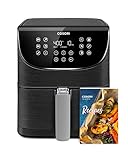
Instant brand (and several third-party companies) sell a separate lid that clips onto your existing pot and turns it into an air fryer. It sounds efficient — one base, two appliances, less counter space. In practice, it's the accessory most likely to end up back in its box within a month. The air fryer lid sits up high above a deep, narrow pot, which means the heating element is far from the food and the basket is small and awkward to load and unload compared to a purpose-built air fryer drawer. Crisping is noticeably less even, and because the whole rig is top-heavy, it's genuinely more annoying to use than just opening a drawer.
If you want air frying, buy an air fryer. A dedicated unit with a pull-out basket circulates hot air far more evenly, preheats faster, and doesn't require you to balance a tall lid assembly on top of a pressure cooker base every time you want crispy chicken thighs. It's a second appliance, yes — but it's a second appliance that actually works well, instead of one gadget doing two things at 70% quality each.
What you still need for the finish: a real pan
Here's the thing nobody tells first-time Instant Pot buyers: pressure cooking is extraordinary at tenderizing and extraordinary at speed, and it is mediocre at browning. The Duo's sauté function can get you a rough sear before you pressurize, but the pot is deep, narrow, and made for liquid — not for the wide, shallow surface area that produces a proper crust on a chicken thigh or a deeply caramelized onion. If you've ever pulled a "seared" roast out of your Instant Pot and wondered why it looked pale and steamed instead of crusted and brown, that's why. The geometry of the pot works against you.
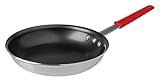
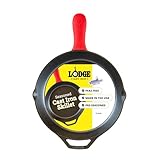
The fix is simple and cheap: keep a separate pan on hand for the finishing step. Sear your protein in a hot pan before it goes into the pot, or crisp it up after the pressure cooking is done, and the difference in the final dish is dramatic — you get the tenderness of pressure cooking and the flavor of actual browning, instead of settling for one or the other. A basic non-stick pan handles eggs, fish, and quick sautéing; a cast iron skillet handles the high-heat sears that build fond for sauces and gravies. Between the two, you've covered everything the Instant Pot itself can't do well.
Where to actually put it all
The unglamorous truth about kitchen gear is that the products that matter most are the ones that determine whether you keep using the good stuff or let it become clutter. Two things make an Instant Pot habit stick. First: somewhere to put the leftovers, because pressure cooking produces a lot of food fast — a full pot of chili or a batch of beans needs somewhere to live in the fridge that isn't a mismatched pile of takeout containers with missing lids. Airtight, stackable containers you can actually see into make you more likely to eat the leftovers instead of rediscovering them, forgotten, three weeks later.
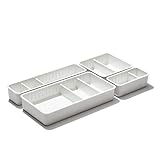
Second: somewhere for the accessories themselves. The sealing rings, the trivet, the extra gaskets, the steamer basket if you bought one — all of it needs a home, or it ends up loose in a drawer getting lost behind the takeout menus. A cheap interlocking drawer organizer solves this in about ten minutes and means you're not digging through a junk drawer every time you want to steam vegetables.

The stuff that's genuinely junk
A short, honest list of Instant Pot accessories that are more novelty than function: the springform cake pan insert (works, but you'll use it twice for cheesecake and then never again — a regular springform pan in your oven does the job with less fuss); the egg rack shaped like a muffin tin (a $4 solution to a problem the trivet already solves); branded silicone oven mitts (any oven mitt works, you're paying for the logo); and the "Instant Pot" official cookbook bundles that mostly repackage recipes you can find free online. None of these are scams exactly — they're just solving problems that don't need solving, dressed up as essential add-ons because they're sold right next to the thing you already bought and trust.
The pattern, if you want the one-sentence version: buy accessories that fix a real limitation of the pot (a second sealing ring for odor, a pan for browning, storage for leftovers and parts). Skip accessories that just repackage something you already own or promise to do a job a dedicated appliance does better.
Frequently asked questions
Do I need the Duo Crisp instead of the regular Duo?
Only if you specifically want the air fryer lid built in and you're willing to accept the tradeoffs described above — less even crisping than a dedicated air fryer, and a bulkier unit overall. For most people, the regular Duo plus a separate air fryer (if you want one at all) is the better setup, both in performance and in total cost if you already own or plan to buy an air fryer separately.
Is the 6-quart or 8-quart size better?
6-quart is the right default for most households of 1–6 people — it handles a whole chicken or a big pot of chili with room to spare. Go 8-quart only if you regularly cook for a crowd, meal prep in bulk for the week, or batch-cook and freeze. The 8-quart is noticeably bigger on the counter, so don't size up "just in case" unless you know you'll use the extra capacity.
How often do sealing rings actually need replacing?
Every 12–18 months with regular use, or sooner if you notice the lid isn't sealing properly (the pot won't come up to pressure) or the ring looks cracked, stretched, or discolored. Keeping two rings — one for savory, one for sweet or neutral cooking — also extends the life of each, since you're not cycling one ring through every type of food.
Can the Instant Pot replace my slow cooker entirely?
For most people, yes. The Duo's slow cook function performs comparably to a dedicated slow cooker for the vast majority of recipes, and you gain the pressure cooking option for days when you don't have eight hours. The only exception is if you specifically want a slow cooker's removable ceramic insert for serving at the table — the Instant Pot's steel insert isn't really designed for that.
Is pressure cooking actually safe?
Yes. Modern electric pressure cookers like the Instant Pot have multiple redundant safety mechanisms — the lid won't open while the pot is pressurized, and there are several backup pressure-release valves built in. The stovetop pressure cooker horror stories people remember from decades ago involved a different generation of hardware with far fewer safeguards. Electric models have an excellent safety record.
What's the single best first recipe to try?
Dried beans, no soaking required. It's the recipe that best demonstrates why people fall in love with pressure cooking — a bag of dried black beans that would normally take hours (plus an overnight soak) comes out perfectly tender in under an hour, start to finish, with no planning ahead required. It's also nearly impossible to mess up, which makes it a good confidence-builder before you try anything more ambitious.