Five straight days of rain, a heat advisory that turns the sidewalk into a griddle, or a snowstorm that closes off the backyard — every dog owner eventually hits a stretch where the normal walk-twice-a-day rhythm just isn't happening. And every dog owner knows what comes next: the pacing, the whining at the door, the sudden interest in chewing a table leg. A dog that isn't moving its body or using its brain doesn't just get bored — it gets loud about it. The fix isn't more walks you can't take; it's mental work, which you can do entirely indoors. Here's what actually holds a dog's attention when the weather won't cooperate, plus the free techniques that make the gear work twice as hard.
- Top pickKONG Classic Dog Toy~$13
- Best budgetMammoth Flossy Chews Cottonblend Rope~$8
- Worth the splurgeFurbo 360° Dog Camera, no subscription required~$147
Why "mentally tired" beats "walked tired" on a bad-weather day
Sniffing, problem-solving, and working for food burns mental energy the same way running burns physical energy — and mental fatigue is often just as effective at settling a restless dog as another lap around the block. A fifteen-minute puzzle session can leave a dog as calm as a much longer walk, because the dog's brain did the work, not just its legs. That's the whole premise behind enrichment toys: not a fitness replacement, but a genuine replacement for the settling effect a walk has on a dog's nervous system.
One catch: dogs habituate to toys fast. Something fascinating on day one can be ignored by day three if it just sits on the floor being the same shape every day. The fix isn't buying more toys — it's rotating the few good ones you have and changing how you present them, covered below. But you do need a small core set of things actually built to hold interest in the first place, because plenty of pet-aisle "puzzle toys" don't.
The core kit: something to work for, something to chew, something worth working for
If you only own one enrichment tool, make it a stuffable rubber toy. It's the most-recommended item by trainers and behaviorists for a reason — it converts a dog's dinner, or a smear of something tasty, into 20–40 minutes of focused licking and problem-solving instead of 90 seconds of gulping from a bowl.
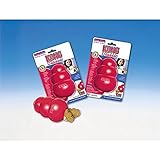
The trick that makes a KONG punch above its price: freeze it. Stuff it, then let it sit in the freezer overnight. A frozen KONG takes two to three times longer to empty than a room-temperature one — a 15-minute activity becomes a genuine 30-to-45-minute occupation, long enough to get through a work call without a dog staring at you the whole time. Keep two or three stuffed and frozen in rotation during a bad-weather stretch. Fastest fill: plain kibble packed tight. Slowest, save for the worst days: kibble layered with peanut butter and frozen solid. Skip anything with xylitol on the label — it's toxic to dogs and hides in some "sugar-free" peanut butters.
Puzzle-solving covers the brain, but plenty of dogs — especially adolescents and higher-energy breeds — also need somewhere to put physical, mouth-driven energy when they can't run it off outside. A sturdy rope toy fills that gap without needing a human to referee the whole time.
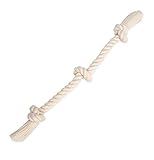
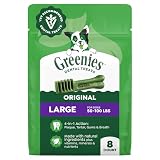
Check it periodically for loose strings and retire it once it's fraying, especially with aggressive chewers. And a stuffable toy is only as engaging as what's inside it — using the same handful of kibble every time is part of why dogs lose interest in a KONG after a week. Keep something chewier on hand specifically for stuffing, not just handing out loose.
Keeping tabs while your dog self-entertains
Enrichment toys are designed to work without you standing over them — the whole point on a day you're stuck inside trying to get things done. But that doesn't have to mean you can't check in. If your dog is in another room working through a frozen KONG while you're on a call, an indoor camera lets you actually see whether it's working instead of guessing.
Neither camera is an enrichment tool by itself — a dog doesn't get mentally tired from being watched. But on a genuinely bad-weather week, when you might be leaving a dog alone with a toy longer than usual because you can't break up the day with a walk, glancing at your phone to confirm everyone's fine is worth something real.
What to skip: the gimmicks that don't actually hold attention
Not everything sold as "enrichment" earns the label. A few categories worth skepticism before you buy:
Treat-dispensing balls with a single difficulty setting. Most only have one way to release food — a dog either figures it out in two minutes and it's empty, or gives up entirely. Without an adjustable difficulty, it stops being useful within a week.
Squeaky toys as a stand-in for mental work. A squeaker gets attention for about ninety seconds and then it's just noise. Fine as a supplement, but it doesn't tire a dog out the way working for food does.
Anything sold mainly on cuteness. Plush puzzle toys shaped like tacos or pizza slices look great in photos, but check the mechanics — if a dog gets everything out by shaking it twice, the shape is doing more work than the design.
"Interactive" toys that need constant human involvement. If a toy requires you to reload or actively play along every few minutes, it isn't solving the bad-weather problem — it's just a different way of needing your full attention indoors instead of out.
Free techniques (and a real rotation) that make the gear work harder
Gear helps, but free techniques often make the difference between a dog who's genuinely settled and one who's just quiet for a few minutes. Rotate two or three toys instead of leaving everything out at once — something that disappears for a week and reappears gets treated like it's new. Try scatter feeding: skip the bowl for one meal and scatter kibble across a towel or muffin tin; sniffing it out uses the same part of a dog's brain as tracking a scent trail outside. Run short training sessions instead of one long one — five minutes of "sit," "stay," and "touch" a few times a day, especially with something not fully mastered yet, adds up to real fatigue with no equipment needed. Hide a few treats around a room while your dog waits elsewhere, then let them loose to find everything — scent work with no course or gear. And change locations: doing the same puzzle in the same corner every day gets stale, so move a KONG session to a different room for free novelty.
The realistic bad-weather kit, pulled together: two or three frozen, stuffed KONGs ready in the freezer; a rope toy out for physical energy between puzzle sessions; Greenies broken up and saved specifically for stuffing rather than handed out loose; a few minutes of scatter feeding or scent games worked into the day; and short training sessions instead of one long one. None of it requires leaving the house, and together it covers both the restlessness and the boredom that build when normal walks aren't happening. A camera isn't essential, but if you're leaving a dog to work through a toy alone longer than usual, it's a reasonable way to confirm the plan is actually working.
Frequently asked questions
How long will a frozen KONG actually keep a dog occupied?
A well-packed, fully frozen KONG typically takes a dog 30 to 45 minutes to empty, compared to 10–15 minutes for one that's just room temperature and loosely stuffed. Freezing it overnight is the single biggest lever for making a stuffable toy last longer.
My dog loses interest in puzzle toys after a few days. What am I doing wrong?
Probably nothing — this is normal habituation, not a toy failure. Rotate two or three toys in and out of use rather than leaving everything accessible all the time, and vary what you stuff them with so the same toy doesn't always deliver the same reward.
Is a rope toy safe to leave with a dog unsupervised?
For light-to-moderate chewers, generally yes for short stretches, but check it periodically for fraying or loose strings and retire it once it starts coming apart. For aggressive shredders who tend to pull off and swallow fibers, supervise rope toy time more closely.
Do enrichment toys actually replace a walk?
Not for physical exercise — a dog still needs to move its body. But for the mental fatigue and settling effect that makes a dog calm and ready to nap, 15–20 minutes of real puzzle-solving can have an outsized effect, often more than an equivalent stretch of low-effort physical activity indoors.
What's the actual difference between the two camera options here?
The Furbo pans and tilts to follow movement around a room and includes two-way audio, useful if you want to actively check on and talk to your dog mid-session. The Petcube is a simpler, cheaper fixed-view camera — a lower-cost way to glance in and confirm your dog is calm and occupied rather than getting into something they shouldn't.
What treats should I avoid stuffing into a KONG or similar toy?
Avoid anything containing xylitol, which shows up in some sugar-free peanut butters and is toxic to dogs even in small amounts — always check the ingredient label. Also skip anything overly greasy or rich if your dog has a sensitive stomach, since a large stuffed toy delivers more of it at once than a normal treat would.
How many enrichment toys does a dog actually need?
Far fewer than the pet aisle implies. A single durable stuffable toy like a KONG, one chew or tug toy, and a rotating supply of higher-value treats to stuff them with covers most of what a dog needs for genuine mental occupation — rotation and technique (freezing, scatter feeding, scent games) matter more than the sheer number of toys owned.